Science
The 3-Billion-Year-Old Bacterial Defenses Still Working Inside Your Body
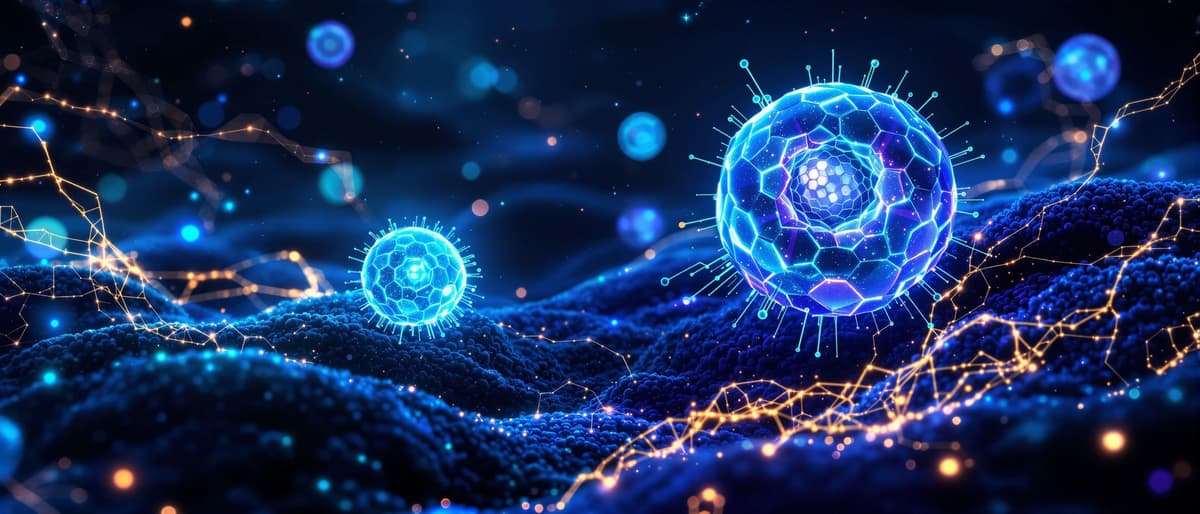
AI-generated illustration
Every time your body fights off a virus, it uses defense systems that bacteria invented over 3 billion years ago — long before animals ever existed. Dozens of new discoveries are rewriting how scientists understand human immunity.
150+Distinct bacterial defense systems catalogued by the Weizmann Institute since 2018
The facts
- 1Your immune system has two main layers: the 'innate' system, which reacts instantly to any threat, and the 'adaptive' system, which learns and remembers specific germs. The innate system is far more ancient — and scientists have now traced some of its core parts all the way back to bacteria.
- 2Bacteria have been battling tiny viruses called bacteriophages — or 'phages' for short — for at least 3 billion years. To survive, they evolved dozens of defensive tools, including CRISPR, the same molecular system now used in gene-editing medicine for humans.
- 3The Weizmann Institute of Science in Israel has catalogued over 150 distinct bacterial defense systems since 2018, many of which were completely unknown to science before then. Each one is a possible window into how ancient immunity worked.
- 4A key part of human antiviral immunity — a signalling chain called the cGAS-STING pathway — operates in nearly the same way as an ancient bacterial defense enzyme. Harvard Medical School researchers showed that the human cGAS enzyme and its bacterial counterpart share almost the same three-dimensional molecular structure, even billions of years apart.
- 5These shared defense systems are opening new doors in medicine: scientists are studying them to improve treatments for autoimmune diseases (conditions where the body's defenses mistakenly attack healthy tissue) and to make cancer immunotherapy — using the immune system to fight tumours — more precise and effective.
Why it matters
Evolution rarely discards tools that work — it repurposes them. The fact that our cells still carry billion-year-old bacterial defenses shows how deeply all life is connected, and is guiding scientists toward smarter treatments for autoimmune diseases and cancer.
Sources
- Quanta Magazine
- Weizmann Institute of Science
- Harvard Medical School