Science
Bacterial Flagellar Motor Mystery Solved After 50 Years of Research
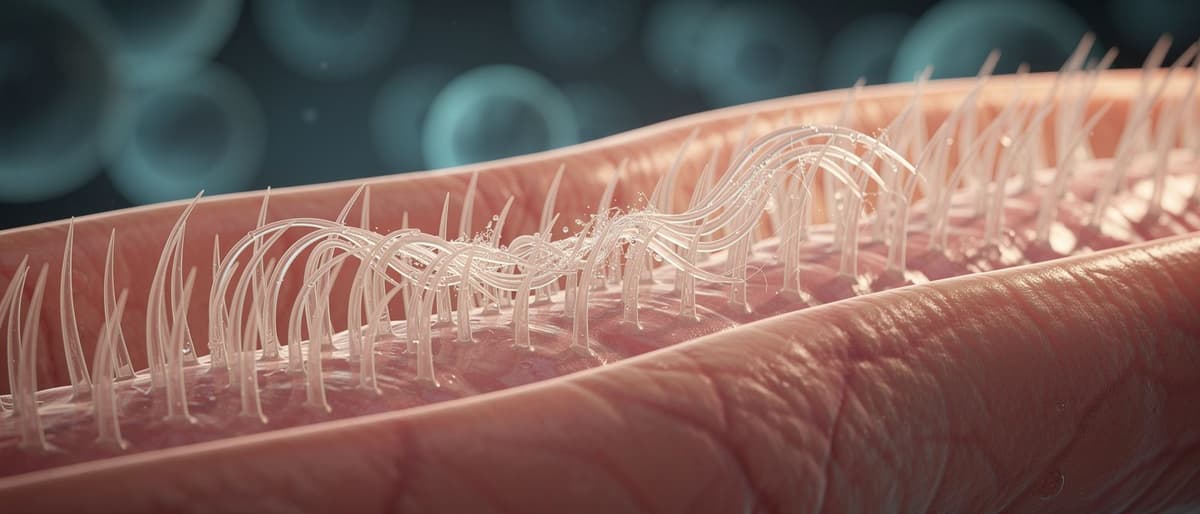
AI-generated illustration
Smaller than a grain of sand yet spinning up to 1,500 times per second, the tiny motor that powers bacteria has puzzled scientists for half a century — until now. Physicists and biologists have finally mapped how this molecular machine converts a flow of charged particles into spinning motion.
45 nanometresWidth of the bacterial flagellar motor — 2,000× thinner than a human hair
The facts
- 1The bacterial flagellar motor is about 45 nanometres wide — roughly 2,000 times thinner than a single human hair — making it one of the smallest rotating machines in nature.
- 2The motor spins by harvesting energy from a stream of hydrogen ions (protons) flowing across the cell membrane, a process called the proton-motive force, similar to water turning a turbine.
- 3After five decades of research, scientists at institutions including the University of Oxford and RIKEN in Japan used cryo-electron microscopy to capture the motor's structure in atomic detail for the first time.
- 4Each bacterium uses its spinning flagellum (tail) to swim toward food or away from danger, making this motor essential to how bacteria infect hosts — including the human body.
- 5Understanding the motor's mechanics could help engineers design nano-scale machines or guide drug development targeting harmful bacteria that cause diseases like typhoid and cholera.
Why it matters
Knowing exactly how this motor works opens two big doors: first, it could lead to new antibiotics that jam the motor of disease-causing bacteria; second, it gives engineers a working blueprint for building human-made machines at the nanoscale — a goal that has remained out of reach for decades.
Sources
- University of Oxford
- RIKEN (Japan)
- Quanta Magazine