Current Affairs
How Seashells Become Living Fortresses for Ocean Mollusks
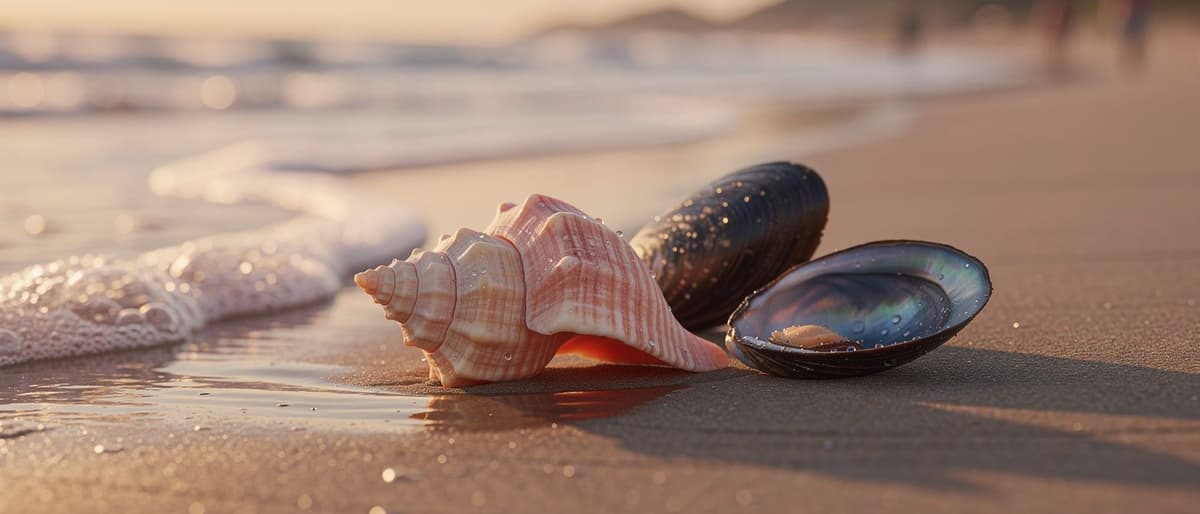
AI-generated illustration
That spiral shell on the beach was never a souvenir waiting to be found. It was a mollusk's slow-built armor, engineered layer by layer to survive crashing waves and hungry predators.
95%typical share of a mollusk shell's dry weight that is calcium carbonate
The facts
- 1Shells are exoskeletons built by mollusks such as clams, mussels, and conchs, not decorations left behind for beachcombers to collect.
- 2A thin sheet of tissue called the mantle secretes calcium carbonate in layers, hardening into the shell's shape over months or years.
- 3One layer, nacre or mother-of-pearl, stacks microscopic mineral tiles like bricks, making the shell far tougher than the raw mineral alone.
- 4A shell's spiral shape, color bands, and thickness usually track the mollusk's diet and habitat, helping it dodge predators like crabs and fish.
- 5Even after a mollusk dies, its shell often becomes a home for hermit crabs, so one structure can shelter several species across its lifetime.
Why it matters
Understanding how mollusks build these structures shows why coastal habitats and shell-rich shorelines matter for far more creatures than the original owner.
Sources
- Smithsonian Magazine
- Smithsonian National Museum of Natural History