Current Affairs
Living Rocks That Are 3.5 Billion Years Old: Meet Earth's Oldest Organisms Still Alive
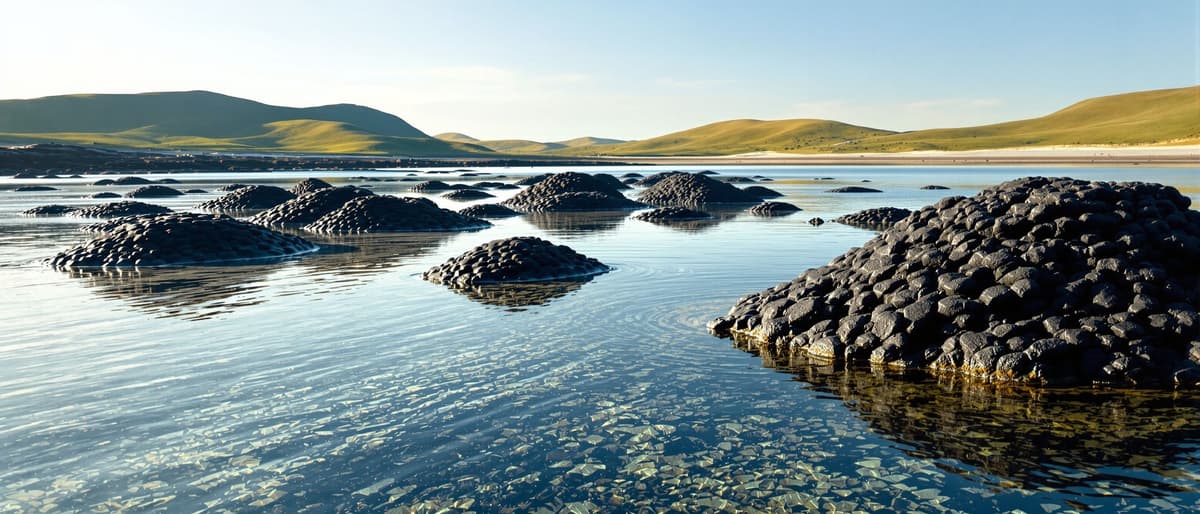
AI-generated illustration
Rocks that breathe — sort of. In a tiny Canadian town called Flower's Cove, you can walk alongside thrombolites: mound-shaped living things that helped create Earth's oxygen billions of years before dinosaurs existed.
3.5 billion yearsAge of the thrombolite lineage — older than all plants, fungi, and animals combined
The facts
- 1Thrombolites are dome-shaped living structures built by ancient microbes called cyanobacteria, which are among the very first life forms to have appeared on Earth.
- 2These organisms work by trapping sediment layer by layer, slowly building rocky mounds in shallow water — the same basic process that has been happening for about 3.5 billion years.
- 3Flower's Cove in Newfoundland, Canada, is one of only two places on Earth where you can find living thrombolites alongside their fossilized ancient relatives in the same location.
- 4Cyanobacteria inside thrombolites produce oxygen through photosynthesis — the same process plants use — and are believed to have filled Earth's early atmosphere with the oxygen all animals, including humans, now depend on.
- 5Because thrombolites are extremely sensitive to pollution and changes in water chemistry, scientists at the Geological Survey of Canada study them as living indicators of environmental health, similar to how an AQI meter measures air quality.
Why it matters
Thrombolites are a rare living link to the very conditions that made complex life possible on Earth. Protecting sites like Flower's Cove means preserving a natural record that no laboratory can recreate — and a reminder that the oxygen in every breath we take was first made by microbes, not trees.
Sources
- Geological Survey of Canada
- Atlas Obscura