How Do Vaccines Train the Immune System to Fight Disease?
5 min read / 2026-09-03
Vaccines work by teaching the body's defenses to recognize a germ before a real infection happens, which is why scientists study new vaccine designs, like ones targeting many strains of a bacterium at once.
What it means
A vaccine is a small, safe preview of a germ, or a harmless piece of it, given to the body on purpose. The immune system, which is the body's defense network, reacts to this preview by learning what the real germ looks like. This way, if the actual infection ever shows up, the body already knows how to fight it quickly, often before a person feels sick at all.
How it works
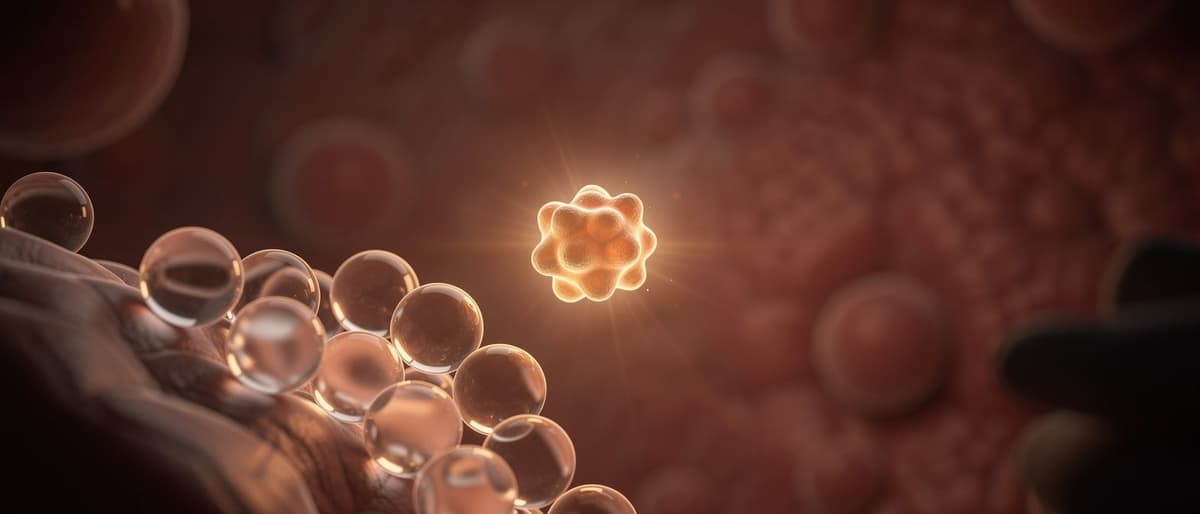
White blood cells called B cells make proteins called antibodies, which are like custom-shaped keys that lock onto a specific germ and mark it for destruction. When a vaccine introduces a piece of a germ, such as a protein or a sugar coating, B cells learn to build antibodies against that exact piece. Some of these cells become memory cells that stick around for years, ready to react fast the next time they see that same germ.
A simple example
Think of it like a fire drill at school. Nobody wants a real fire, but practicing the escape route means everyone reacts fast and calmly if a real fire happens. A vaccine is the practice run for the immune system: it rehearses fighting a weakened or partial version of the germ, so the real infection meets a body that already knows the plan instead of one caught off guard.
Why people talk about it
Some germs are tricky because they come in many different disguises. Streptococcus pneumoniae, the bacterium behind many pneumonia and meningitis cases, has close to 100 known strains, each with a slightly different outer sugar coat. Older vaccines target that sugar coat, so they only cover the strains included in the shot, leaving others free to cause illness. This is why researchers now look at proteins shared across almost all strains, hoping a single vaccine built on those common proteins could offer broader protection instead of chasing each strain separately.
What to remember
Vaccines do not cure disease; they prepare the body to prevent or reduce it before infection starts. Coverage matters as much as the vaccine itself, because a shot that protects against only some strains of a germ still leaves gaps. That is exactly the gap scientists hope to close with pneumococcal research, aiming for one vaccine effective against nearly all strains rather than a select few.
Key words
Antibody
A protein made by immune cells that recognizes and locks onto a specific germ or part of a germ.
Memory cell
A long-lived immune cell that remembers a past germ exposure and reacts quickly if it returns.
Serotype
A variant or strain of a germ distinguished by differences in its outer surface, like a different disguise.
Key facts
- 1Vaccines expose the immune system to a harmless piece or weakened form of a germ so it can learn to respond.
- 2Antibodies are proteins made by B cells that specifically recognize and target one germ or germ part.
- 3Memory cells formed after vaccination or infection allow the body to react faster during future exposure.
- 4Streptococcus pneumoniae has around 100 known strains, and current vaccines only cover a limited set of them.
- 5The World Health Organization and UNICEF both track vaccine coverage gaps worldwide, especially for children.
Why it matters
Understanding how vaccines train immunity explains why scientists keep improving vaccine designs, especially for germs with many strains that older vaccines cannot fully cover.
Sources
- World Health Organization (WHO)
- UNICEF
- U.S. Centers for Disease Control and Prevention