Science
How NASA's Kepler Telescope Found Thousands of Planets — Including Some That Could Host Life
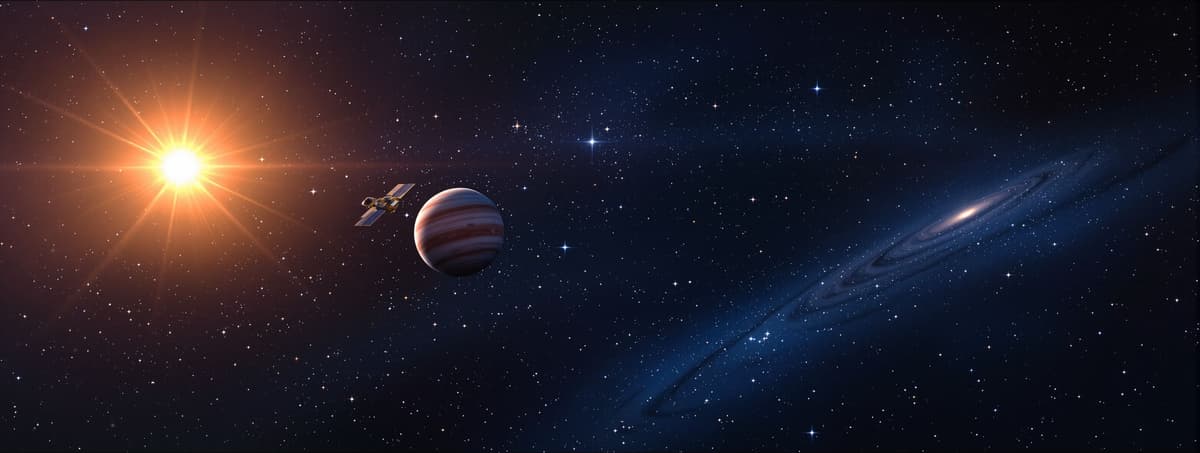
AI-generated illustration
A tiny flicker of starlight, spotted by a telescope in a Colorado parking lot, helped save a space mission that would go on to discover over 2,700 confirmed planets beyond our solar system. NASA's Kepler telescope proved we live in a galaxy crowded with worlds.
2,700+Confirmed exoplanets discovered by NASA's Kepler telescope
The facts
- 1NASA launched the Kepler Space Telescope in 2009 with one goal: to find out how common planets are around other stars in our galaxy, the Milky Way.
- 2Kepler worked by watching for a 'transit' — the tiny dimming of a star's light when a planet passes in front of it, the same way a small coin dims a lamp when crossed in front of it.
- 3A critical observation made with a small ground telescope in a Colorado parking lot helped confirm Kepler's planet-detecting method was reliable before the mission was trusted with full resources.
- 4Over its nine-year mission, Kepler confirmed more than 2,700 exoplanets (planets outside our solar system) and found that small, rocky planets are extremely common across the galaxy.
- 5Some of Kepler's discovered planets sit in their star's 'habitable zone' — the distance range where liquid water could exist on a surface — making them candidates for the search for life.
Why it matters
Before Kepler, astronomers could only guess whether planets around other stars were common or rare. Kepler showed they are everywhere — with billions of planets in the Milky Way alone. That fundamentally changes the question: not 'are there other worlds?' but 'which ones might have life?' Future missions like NASA's James Webb Space Telescope now study those candidates directly.
Sources
- NASA
- Smithsonian Magazine