Science
Interstellar Comet 3I/ATLAS: A Visitor From Another Star System Explained
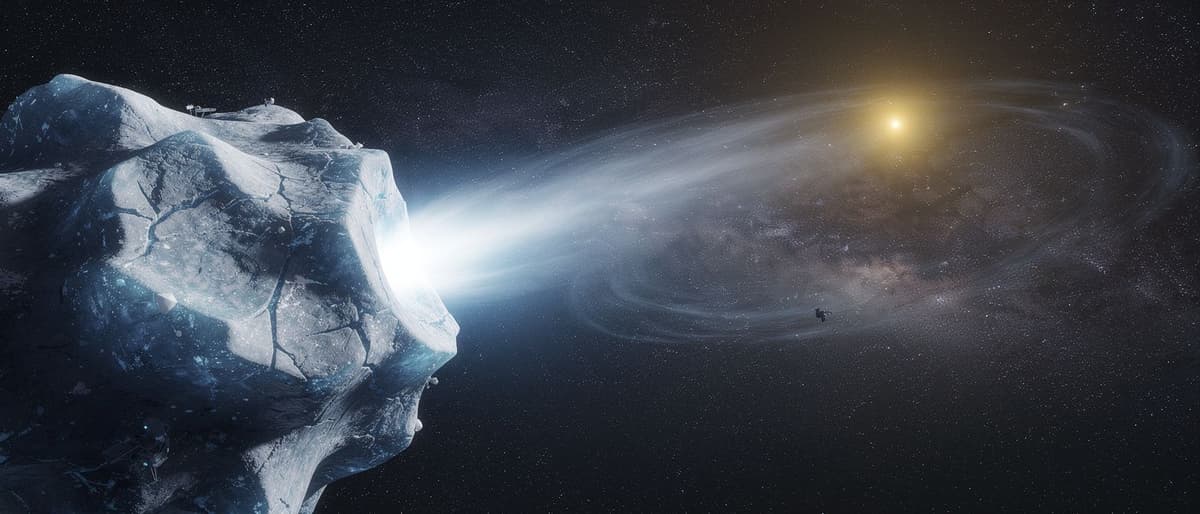
AI-generated illustration
A comet called 3I/ATLAS is speeding through our Solar System right now — and it didn't form here. Telescope studies show it came from a calm, distant star system, making it only the third known interstellar object ever detected passing through our cosmic neighbourhood.
3rdConfirmed interstellar object ever detected passing through our Solar System
The facts
- 13I/ATLAS is the third interstellar object ever confirmed to visit our Solar System, following 'Oumuamua in 2017 and comet 2I/Borisov in 2019, both of which were also spotted only once and never returned.
- 2Interstellar means 'between stars' — so an interstellar object is a chunk of rock or ice that formed around a different star and was then flung across the vast emptiness of space until it entered our Solar System.
- 3Telescope observations analysed by astronomers in June 2026 show 3I/ATLAS has a chemical make-up suggesting it formed in the quiet outer edge of a relatively calm planetary system — a clue about what star systems elsewhere in the Milky Way look like.
- 43I/ATLAS is travelling so fast — faster than any object born in our Solar System could naturally move — that it will not be captured by the Sun's gravity and will eventually fly out into deep space again, never to return.
- 5Each interstellar visitor is like a free sample from another star: studying its chemicals helps astronomers understand whether the building blocks of planets — and possibly life — are common across the galaxy.
Why it matters
Most of what we know about other star systems comes from distant light. 3I/ATLAS gives astronomers a physical object to examine up close. If its chemistry is similar to comets in our own Solar System, it suggests planet-building ingredients are widespread — raising the chance that Earth-like worlds, and maybe life, are not unique to us.
Sources
- Smithsonian Magazine
- International Astronomical Union (IAU)