Science
Where Did Earth's Oceans Come From? New Research Points Inward
Every drop of water in Earth's oceans has an origin story — and for decades, scientists blamed comets and asteroids for delivering it. Now, a fresh hypothesis suggests Earth may have quietly made its own water from the inside out.
84%of Earth's volume made up by the mantle, the layer now suspected of generating water
The facts
- 1For years, the leading theory was that icy comets and asteroids bombarded the early Earth, carrying water molecules that eventually filled the oceans — but the chemistry never quite matched.
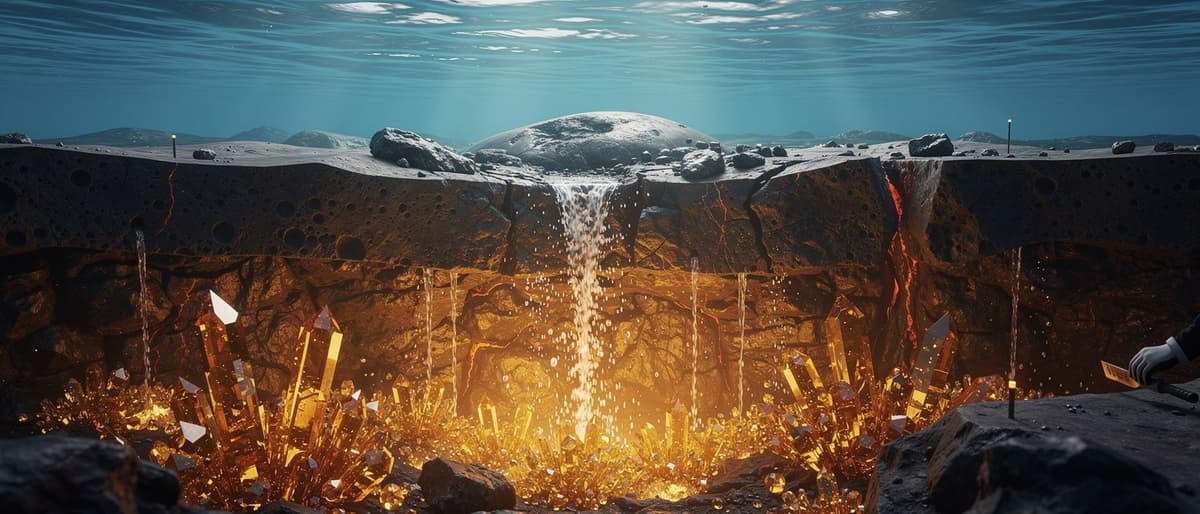
- 2New research published in Quanta Magazine (June 2026) suggests that hydrogen trapped inside Earth's rocky mantle may have reacted with oxygen to produce water molecules deep underground, which then seeped upward over billions of years.
- 3Earth's mantle — the thick rocky layer between the crust and the core — makes up about 84% of our planet's total volume, giving it enormous capacity to store and release gases like hydrogen over geological time.
- 4If water was produced internally, it would have seeped to the surface gradually through volcanic activity and mid-ocean ridges, the underwater mountain chains where tectonic plates pull apart and release material from deep below.
- 5This debate matters beyond curiosity: understanding how Earth got its water helps planetary scientists figure out which other rocky planets — including those discovered by NASA's JWST telescope — might also be able to hold liquid water and support life.
Why it matters
Water is Earth's most essential ingredient for life, so knowing where it came from helps scientists decide which exoplanets — planets orbiting other stars — deserve a closer look. If rocky planets can make their own water internally, the odds of finding liquid water elsewhere in the universe just got more interesting.
Sources
- Quanta Magazine
- NASA James Webb Space Telescope (JWST)