Science
Nuclear-powered Mars spacecraft SR-1 Freedom moves ahead with power module contracts
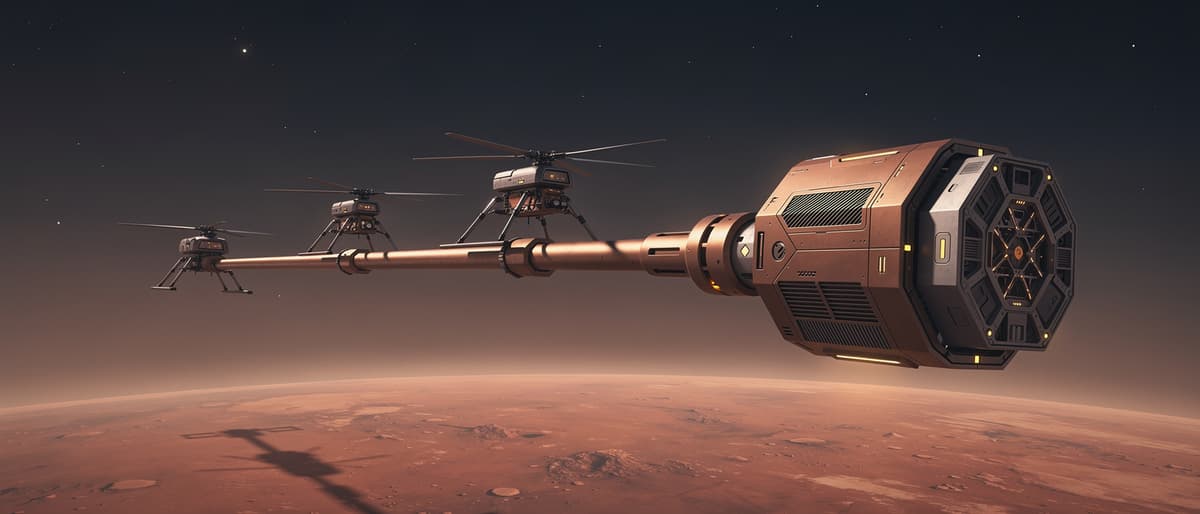
AI-generated illustration
A spacecraft heading to Mars in late 2028 is meant to be the first to use nuclear fission power beyond Earth's orbit. Contract actions now advance its power module, which makes electricity from reactor heat.
3 Mars helicopterscarried by SR-1 Freedom in the SkyFall science mission, launching late 2028
The facts
- 1The power module sits at the end of the spacecraft's boom. It pairs a reactor that makes heat through fission with a system that turns that heat into electricity.
- 2Sierra Lobo Inc. will supply the power conversion system, a closed Brayton cycle design. It changes the reactor's thermal energy into electrical power for the nuclear electric propulsion demonstration.
- 3The Department of Energy's Idaho National Laboratory is designing and developing the reactor. It will be joined with the power conversion system to complete the module.
- 4NASA describes safety reviews across agencies, a chief safety officer, and a design process built around hazards and failure tolerance. The reactor stays inactive until the craft leaves Earth orbit.
- 5The spacecraft will carry SkyFall, three Mars helicopters evolved from the Ingenuity design. They are meant to gather data, test exploration zones and look for potential water sources.
Why it matters
The mission is a test of fission power for propulsion in deep space. NASA links it to systems that could keep a Moon base running through darkness and where sunlight alone is not enough.
Sources
NASA source material informed this AI-assisted summary; NASA has not reviewed it and is not responsible for its accuracy.