Science
Wastewater Surveillance: How Sewage Saved Lives by Tracking Hidden COVID Surges
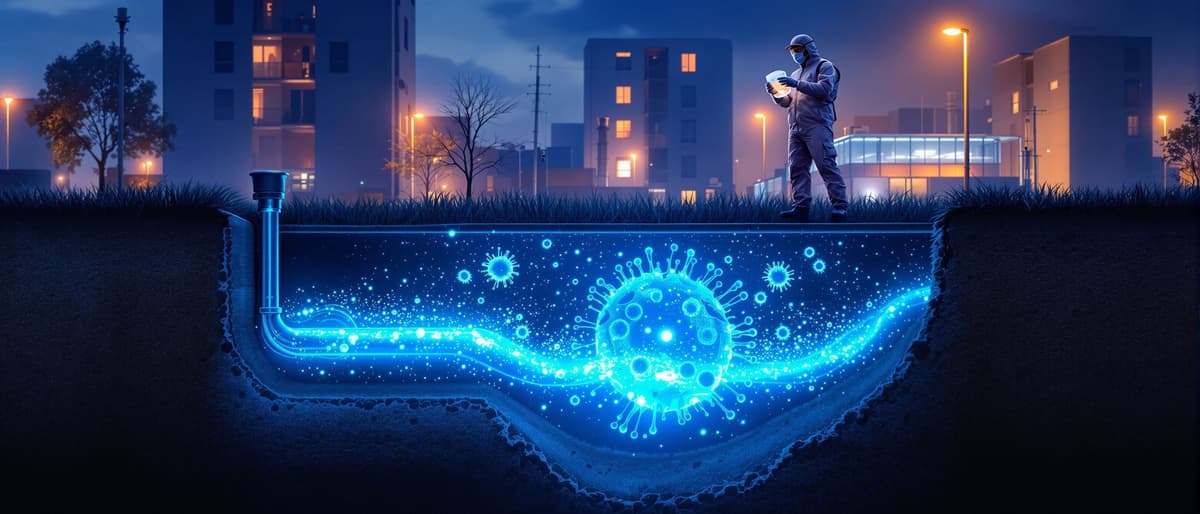
AI-generated illustration
Long after COVID testing booths closed, Bengaluru's drains kept telling the truth — wastewater data caught hidden virus surges that official case counts completely missed.
3–4 weeksEarly warning window wastewater signals provided before hospital cases rose
The facts
- 1Indian Institute of Science (IISc) researchers tracked COVID-19 levels in Bengaluru's sewage and found major infection waves that went undetected once public testing declined after 2022.
- 2Wastewater surveillance works by detecting tiny fragments of a virus's genetic material (called RNA) in sewage, revealing how many people in an area are infected — even those with no symptoms.
- 3The Bengaluru study showed wastewater signals rose sharply several weeks before hospital admissions climbed, giving health officials an early warning window of up to 3–4 weeks.
- 4Cities like Amsterdam, New York, and Singapore already use wastewater monitoring as a permanent public health tool, tracking not just COVID but also polio, influenza, and antibiotic-resistant bacteria.
- 5A single wastewater sample from one treatment plant can reflect the health of tens of thousands of households connected to that drainage network, making it far cheaper than testing individuals.
Why it matters
When testing stops, a silent outbreak can grow unnoticed until hospitals fill up. Wastewater surveillance offers a low-cost, always-on early warning system that protects everyone — including people who never visit a clinic. For India, where millions lack easy access to diagnostic centres, this approach could give health authorities advance notice to stockpile medicines, alert doctors, and prevent avoidable deaths.
Sources
- Indian Institute of Science (IISc), Bengaluru
- The Hindu Science Desk