Science
Webb Telescope Spots Star Nurseries Inside a Spiral Galaxy 23 Million Light-Years Away
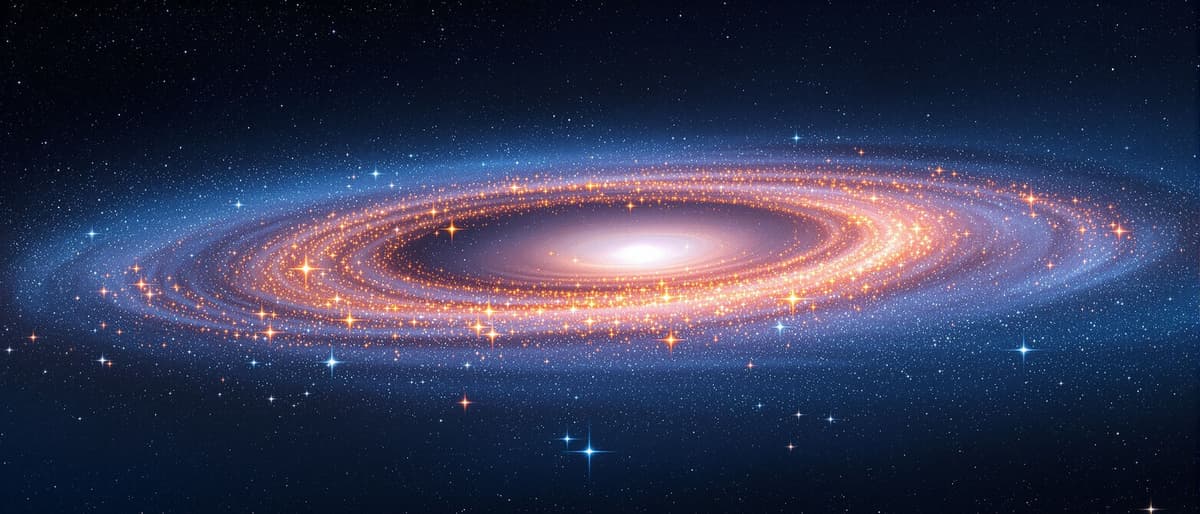
AI-generated illustration
A single image from the James Webb Space Telescope shows glowing clusters of newborn stars inside the spiral arms of Messier 51 — a galaxy so far away that its light left before humans existed on Earth.
23 million light-yearsDistance from Earth to Messier 51 (Whirlpool Galaxy)
The facts
- 1NASA's James Webb Space Telescope captured a near-infrared image of Messier 51 (M51), a spiral galaxy sometimes called the Whirlpool Galaxy, located about 23 million light-years from Earth.
- 2Near-infrared light is a type of light our eyes cannot see, but Webb's instruments detect it and convert it into colours we can recognise — revealing details hidden behind dust clouds.
- 3M51 is one of four nearby galaxies being studied by Webb to understand how young star clusters form and grow inside spiral arms, the curved 'lanes' that give spiral galaxies their pinwheel shape.
- 4The image shows dense regions called star clusters, where hundreds or thousands of stars are born close together — similar to how many seeds sprout at once in the same patch of soil after monsoon rain.
- 5Studying these clusters helps astronomers at NASA and partner institutions understand the timeline of star formation: how long it takes gas and dust to collapse, ignite, and become a star like our Sun.
Why it matters
Every atom of carbon, oxygen, and iron in your body was forged inside a star. Understanding how star clusters form in galaxies like M51 helps scientists piece together the full story of where the building blocks of planets — and life — actually come from.
Sources
- NASA (James Webb Space Telescope mission)
- Space Telescope Science Institute (STScI)