How Do Batteries Store Energy? A Simple Guide for Students
6 min read / 2026-07-04
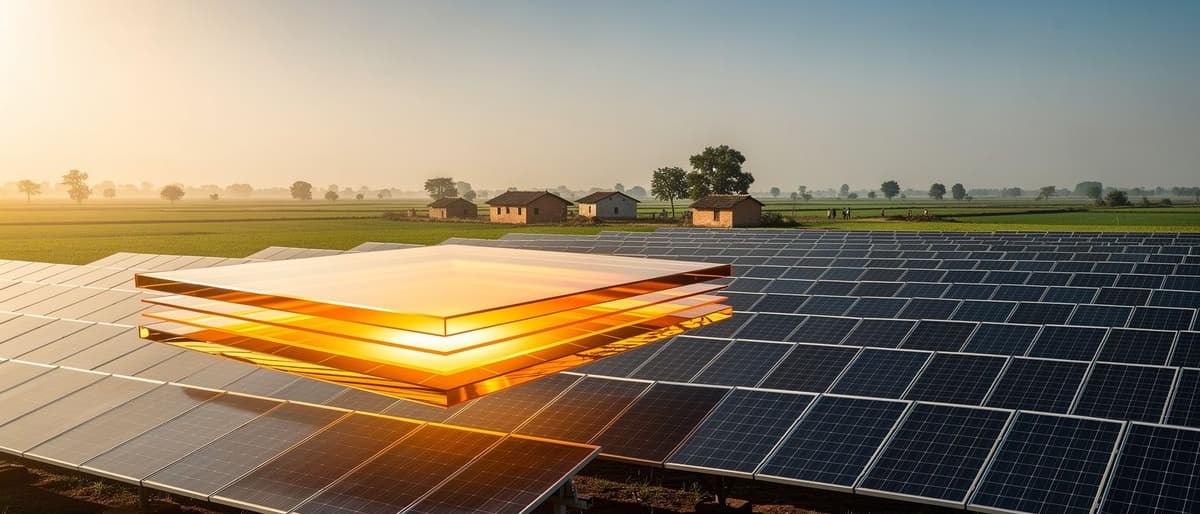
Solar panels make electricity during the day, but what happens when the sun goes down? Batteries store that energy — and understanding how they work explains why storing solar power is one of the biggest challenges in clean energy today.
What a battery actually does
A battery is a device that stores energy in a chemical form and then releases it as electricity when needed. Think of it like a water tank on your rooftop. The tank does not make water — it just holds what was collected earlier so you can use it whenever you turn the tap. A battery does the same thing, except it holds chemical energy instead of water. When you charge a battery, you push electricity into it and force a chemical reaction to happen. When you use the battery, that reaction reverses and releases electricity back out.
How the chemistry works inside
Inside every battery there are two ends called electrodes — a positive end (called the cathode) and a negative end (called the anode) — with a liquid or paste in between called an electrolyte. When the battery is connected to a device, tiny particles called ions travel through the electrolyte from one electrode to the other, and at the same time electrons flow through the wire to your device. That flow of electrons is what we call electric current — the actual electricity powering your phone, torch, or fan. Rechargeable batteries, like the lithium-ion batteries in your phone, can reverse this ion movement when you plug them in to charge.
A simple example from daily life
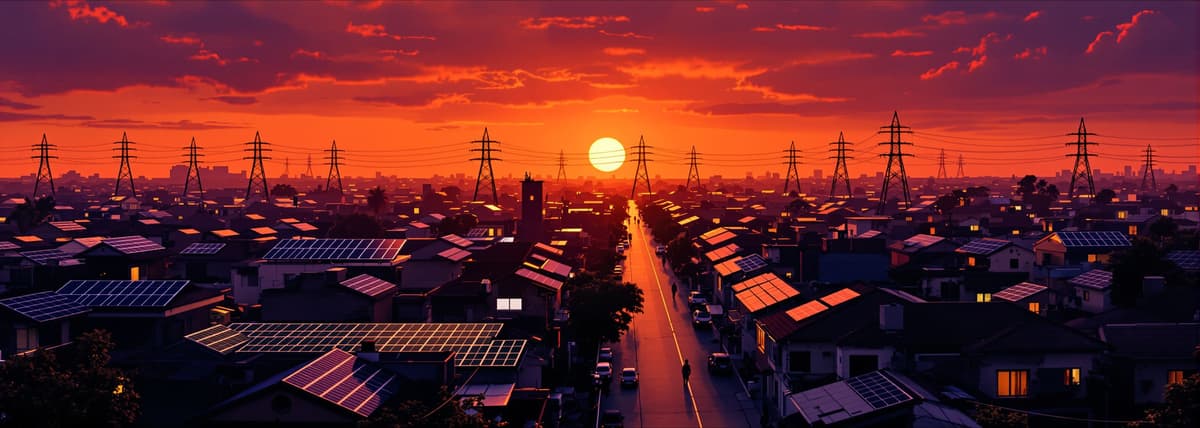
Imagine your family uses a solar panel on the rooftop. Between 10 AM and 4 PM, the panel makes more electricity than the house needs. A battery connected to the system stores the extra. After 7 PM, when the sun is gone, the battery slowly releases that stored electricity to run lights and fans. Without the battery, any extra daytime solar power would simply be wasted, and your family would need to buy electricity from the grid at night. This is exactly the challenge India faces on a national scale — solar plants make lots of power during the day but need batteries to be useful at night.
Why large-scale storage is difficult
Storing electricity for one phone is easy. Storing enough electricity for a city is very hard. Lithium-ion batteries — the same type used in phones and electric vehicles — are the most common choice today, but they are expensive to make at large scale. Mining lithium and cobalt (metals needed for the batteries) also has environmental costs. Researchers and companies around the world are testing other options, such as sodium-ion batteries, iron-air batteries, and even giant tanks of flowing liquid called flow batteries. The International Energy Agency notes that bringing down battery storage costs is one of the most important tasks in the global energy transition.
What to remember
Batteries do not generate electricity — they store it. The key measure of a battery is its capacity, which tells you how much energy it can hold, usually measured in kilowatt-hours (kWh). A typical smartphone battery holds about 0.01 kWh. A home solar-storage battery holds roughly 5–15 kWh. A large grid-scale battery can hold thousands of kWh. As battery technology improves and costs fall, renewable energy like solar and wind becomes far more practical, because the energy made during sunny or windy hours can be saved for use at any time of day or night.
Key words
Electrode
One of the two ends inside a battery (anode or cathode) where chemical reactions take place to store or release energy.
Electrolyte
A liquid or paste inside a battery that allows ions to move between the two electrodes, enabling the battery to work.
Kilowatt-hour (kWh)
The standard unit for measuring electrical energy; one kWh can run a 100-watt bulb for 10 hours.
Lithium-ion battery
A type of rechargeable battery that moves lithium ions between electrodes; used in phones, laptops, and electric vehicles.
Key facts
- 1Lithium-ion batteries work by moving lithium ions between two electrodes through an electrolyte — the same basic chemistry used in phone batteries and electric vehicles.
- 2The first rechargeable lead-acid battery was invented by French physicist Gaston Planté in 1859, more than 160 years ago.
- 3A kilowatt-hour (kWh) is the standard unit for measuring stored energy — one kWh can run a ceiling fan for roughly 10 hours.
- 4Grid-scale battery storage capacity worldwide grew by about 130 gigawatt-hours in 2023, a record year according to the International Energy Agency.
- 5India's government has announced a production-linked incentive scheme to encourage domestic manufacturing of advanced battery cells, reducing dependence on imports.
Why it matters
As solar and wind power grow, batteries decide whether clean energy can power homes and cities around the clock — making storage technology central to India's and the world's energy future.
Sources
- International Energy Agency (IEA) – Energy Storage report
- US Department of Energy – Office of Electricity, Energy Storage Program
- Ministry of New and Renewable Energy, Government of India – National Programme on Advanced Chemistry Cell Battery Storag