How Do Solar Panels Make Electricity, Even on Cloudy Days?
5 min read / 2026-09-01
Solar panels turn sunlight into electricity using photovoltaic cells, and they keep working on overcast days because they capture diffuse light, not just direct sun.
What it means
A solar panel is made of many small units called photovoltaic (PV) cells, usually built from silicon. When sunlight hits these cells, it knocks electrons loose inside the material, creating a flow of electricity. This is called the photovoltaic effect. The electricity made is direct current (DC), which a device called an inverter converts into the alternating current (AC) that powers homes and plugs into the grid.
How it works
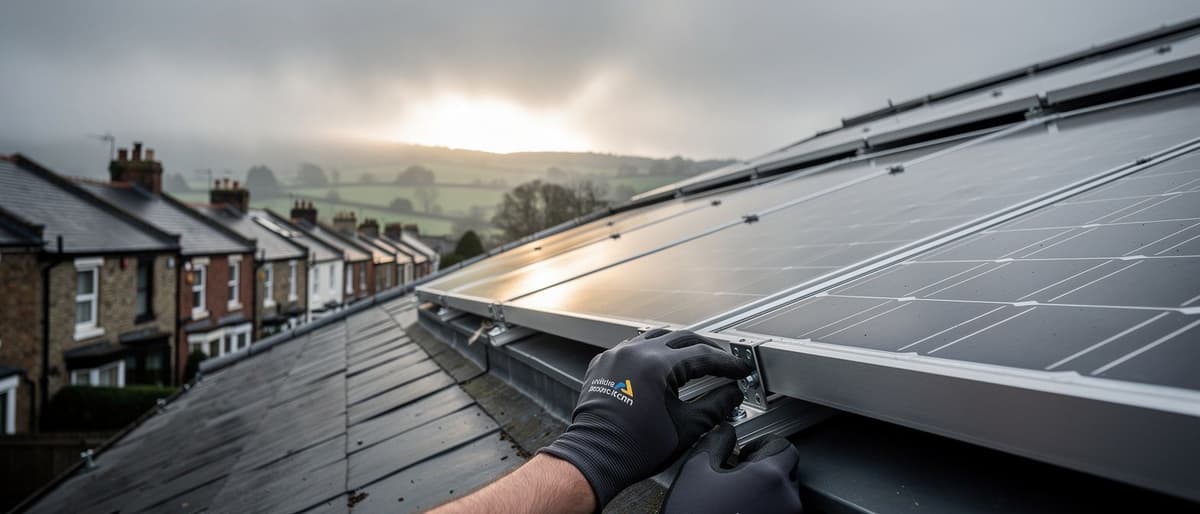
Sunlight doesn't need to be direct or intense to generate power. On a cloudy day, light scatters through the clouds and still reaches the panel as diffuse light, just with less energy per square metre than a clear sunny day. PV cells respond to both direct and diffuse sunlight, so they keep producing electricity, only at a reduced rate. This is why regions with grey skies, like much of the UK, can still generate meaningful power over a full year, even though sunnier regions produce more per panel.
A simple example
Think of a solar panel like a bucket collecting rain. On a bright day, thick rain fills the bucket fast. On a cloudy day, it's more like a drizzle, slower, but the bucket still fills over time. Add up a whole year of drizzle and light rain, and the bucket can still end up fairly full. That's similar to how cloudy regions can still generate enough solar electricity annually to lower a household's yearly energy bill by hundreds of pounds or rupees, depending on local prices.
Why people talk about it
Two trends are making solar panels attractive even outside traditionally sunny regions: electricity prices from utility suppliers have been rising in many countries, while the cost of manufacturing and installing solar panels keeps falling. That combination shortens the break-even period, the time it takes for savings to cover the upfront cost. This is why solar is now discussed as a realistic saving option even for cloudier places, not just deserts or tropical regions.
What to remember
Solar panels don't need constant sunshine to be useful; they need enough daylight, direct or diffuse, over a year. Actual savings depend on factors like roof direction, local electricity rates, and how much power a household uses during the day. Panels facing south (in the Northern Hemisphere) and free of shade typically perform best, but even imperfect setups can still generate worthwhile savings over time.
Key words
Photovoltaic (PV) cell
A small unit inside a solar panel that converts sunlight into electricity, usually made from silicon.
Diffuse light
Sunlight that has scattered through clouds or particles in the air, rather than reaching the ground as a direct beam.
Inverter
A device that converts the direct current (DC) electricity from solar panels into the alternating current (AC) used by homes and the power grid.
Break-even point
The point in time when the money saved on energy bills finally equals the upfront cost of installing solar panels.
Key facts
- 1Solar panels are made of photovoltaic (PV) cells, usually built from silicon, that convert sunlight directly into electricity.
- 2PV cells respond to both direct sunlight and diffuse (scattered) sunlight, so panels keep generating power on cloudy days, just at lower output.
- 3An inverter is needed to convert the direct current (DC) electricity solar panels produce into the alternating current (AC) used by household appliances and the grid.
- 4Falling hardware and installation costs have shortened the break-even period for solar panels, even in regions with less sunshine.
- 5Panel performance is affected by roof orientation, shading, and the angle of installation, not just how sunny the local climate generally is.
Why it matters
Understanding how solar panels work without direct sun explains why even the UK's cloudiest regions can still cut energy bills by installing rooftop panels.
Sources
- The Guardian
- International Energy Agency (IEA)
- Ofgem